75% Spike in Water Prices Marks Taiz Crisis
Escalating Houthi siege around Yemen’s third-largest city has driven local water costs up sharply while cutting off critical supply lines for over one million residents.
By Khalid Rahman ·
Yemen’s third-largest city has endured a decade of water scarcity, but recent weeks have pushed the situation into crisis as Houthi forces tighten their grip on Taiz. The escalating conflict with government troops has created a siege that humanitarian organizations now describe as barely meeting the needs of the city’s population. This development marks a significant shift in the ongoing civil war that has fractured the country since 2014. The situation has moved from manageable strain to a critical shortage affecting daily survival for millions.
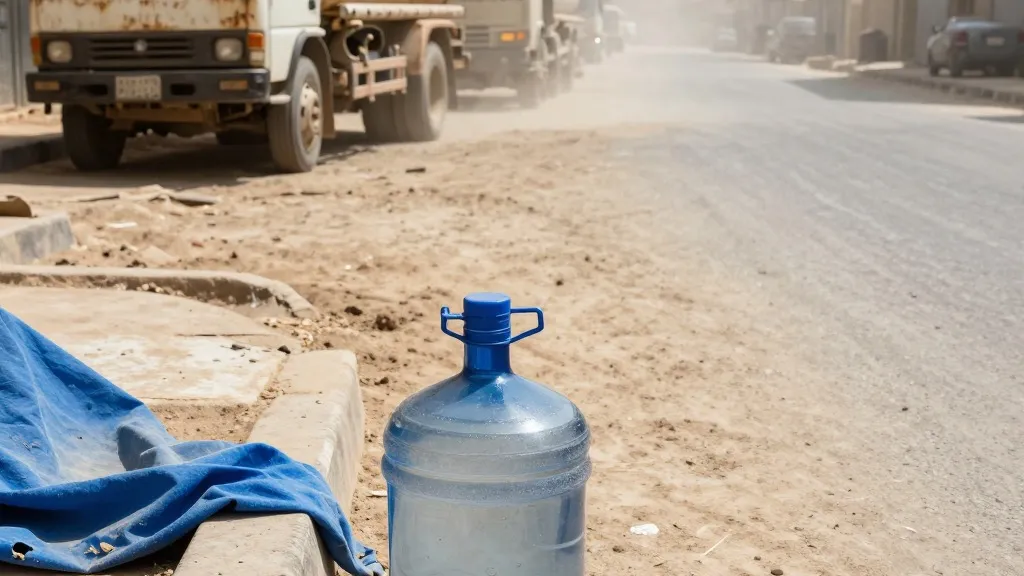
The numbers reflect the severity of the current blockade. More than one million residents are affected by restricted well access, fuel-starved desalination plants, and blocked water trucks. Bottled water prices have surged by as much as 75% in just a few weeks. Grocery costs have also risen, with flour and rice now costing about 50% more than in the summer. Cooking gas prices have quadrupled, forcing many households to burn wood, charcoal, or cardboard for heat. These financial pressures are compounding the physical scarcity of essential resources.
Local families are adapting to the harsh new reality by stretching every drop of water. Hadil al-Shahid, a resident with two young children, described how her family once used 10 liters of bottled water daily for drinking and cooking. That same amount now lasts about four days. She noted that they have stopped drinking their usual daily coffee and tea to conserve supplies. Some households are now purchasing water on credit to cope with the price hike. These personal sacrifices highlight the immediate impact of the siege on domestic life.
The shortage extends beyond drinking water to include fuel and food, which threatens public health infrastructure. Hospitals and sanitation services are struggling to operate without adequate fuel. Amnesty International has urged the Houthis to open roads immediately, warning that Taiz is on the brink of a severe humanitarian disaster. The UN reports that Taiz province has absorbed roughly 124,000 displaced people since August. Jens Laerke, a UN spokesperson, stated that many of these families live in makeshift shelters and survive on one meal a day. The lack of waste collection and community kitchens increases the risk of disease, including cholera.
The military context involves the Houthis capturing the port city of Mokha last month, which is vital for Red Sea shipping. This victory allowed them to advance on Taiz and control key roads. Truckers making the dangerous trip into the city have tripled their rates in some cases. The water utility and desalination plants are operating well below capacity due to fuel shortages. The government still holds the center of Taiz but faces stiff resistance in the surrounding hills. Analysts suggest that controlling Taiz is a strategic goal for the Houthis if they wish to push south toward Aden and Lahj.
Ahmed Abdel Gaber, who is displaced with nine relatives, said his income from hauling construction material is no longer steady. His family now relies heavily on assistance and donations for food. Al-Shahid had to close her hair salon as customers prioritized food and water over services. Her children now eat mostly rice, bread, and cheese. The siege complicates resupplying government forces, and analysts expect any attempt to seize the city would be a prolonged and costly battle. Three Houthi officials claimed the group controls about 80% of the surrounding countryside and several neighborhoods inside the city, a figure the Associated Press could not verify.
The danger to civilians is immediate and tangible. Houthi missiles hit a residential area earlier this week, killing two teenage girls. Abdel Gaber hears daily explosions from fighting about five kilometers away. His family will not return to their mountain village for safety reasons. Al-Shahid stated that she cannot afford to leave her home. She described staying in their home as inevitable, whether it be a matter of life or death. The situation in Taiz now represents a critical test of resilience for its residents as the siege continues to tighten.
Source: NPR