Rural Security Crisis: Eastern Nigeria Village Hit by Motorcycle Raid
Conflicting reports on the death toll emerge after armed gunmen attacked a community in Taraba State, highlighting the persistent threat of banditry in remote areas.
By Neha Iyer ·
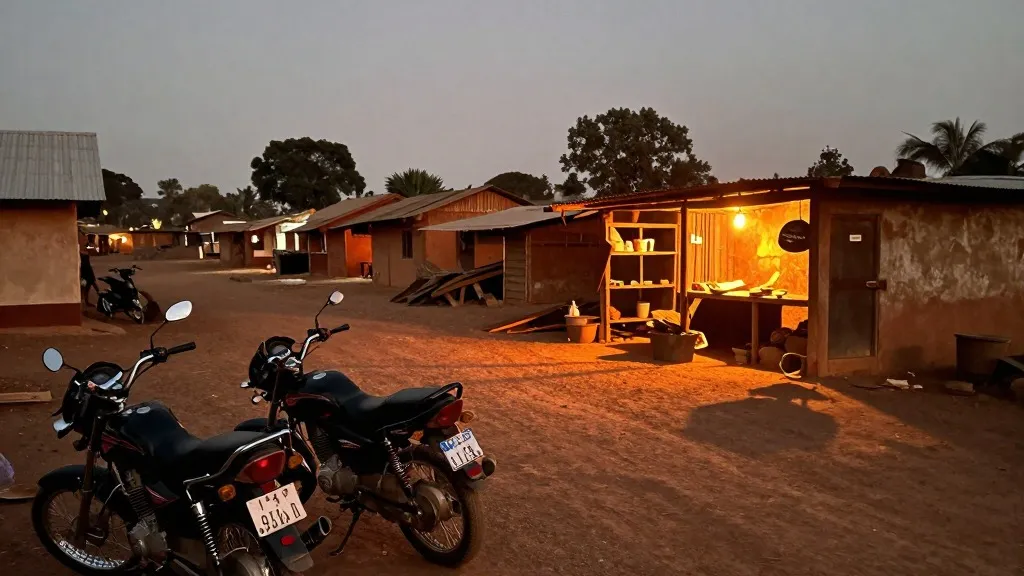
Violence in Nigeria's rural heartland remains a persistent challenge for local communities and state authorities alike, forcing residents to navigate a landscape where armed groups operate with significant freedom. On Saturday, police confirmed that at least ten people were killed in a coordinated assault on the village of Binnari in Taraba State. This incident marks the latest in a series of attacks linked to banditry and armed factions that have destabilized several regions of the country.
The official figures from law enforcement place the initial death toll at ten, with bodies recovered by Friday evening. Officers reported that a large contingent of gunmen arrived on motorcycles to execute the raid. During the brief occupation of the village, the attackers systematically looted local shops, seizing food supplies and other goods before departing the area.
However, the number of casualties appears to be rising rapidly, creating a discrepancy between official police counts and community reports. Survivors speaking to the AFP news agency indicated that the toll could be at least twenty. The human rights organization Amnesty International provided a more staggering estimate in a statement issued on Saturday, asserting that forty people were killed. The group noted that while police initially confirmed ten deaths, additional bodies were discovered later in the day on Saturday.
The attack began just after Friday prayers, a time when residents are typically gathered in a vulnerable state. Sa'idu Nuhu, a resident of Binnari, described the aftermath to AFP, stating, "After the attackers left, we counted more than 20 bodies, and some people were still missing." Another local resident, Isiyaku Musa, corroborated this higher figure, placing the death toll at no fewer than twenty individuals.
Local community leaders provided detailed accounts of the tactical approach used by the assailants. Malam Abubakar Saifullahi explained that the group arrived on approximately fifty motorcycles, with two men riding on each bike. This numerical advantage allowed them to sweep through the village quickly. He noted, "They looted shops and took cash, foodstuffs and other provisions. They also took motorcycles abandoned by people fleeing the attack."
The incident has drawn sharp criticism from international observers who monitor the situation in Nigeria. Amnesty International expressed frustration with the Nigerian authorities, arguing that they continue to leave rural communities in parts of the north at the mercy of gunmen. The group emphasized that these armed actors are repeatedly committing atrocities with impunity, suggesting a structural gap in protective services for remote populations.
Banditry has evolved into a significant economic and social issue in northwest and central Nigeria. Powerful gangs frequently clash with police and military forces that are often overstretched and spread thin across remote, hard-to-reach terrain. Taraba, located in the central-eastern part of the country, is particularly susceptible to these threats. The bandit groups operating in this region are not driven by specific ideological beliefs but rather by economic opportunism.
These groups sustain themselves by raiding villages, kidnapping individuals for ransom, and levying informal taxes on farmers and miners. This dynamic is most pronounced in rural areas where the presence of the state is minimal, leaving residents to rely on their own resources and community networks for protection. The reliance on personal responsibility and local organization becomes critical in the absence of a strong central security presence.
Nigeria is simultaneously engaged in a long-standing armed rebellion that began with the Boko Haram uprising in 2009. While the focus of that conflict is primarily in the northeast, the threat of banditry in the center and west complicates the national security picture. In a separate development on Saturday, the Nigerian military announced that it had killed fifteen terrorists in an air strike in the northeastern state of Borno, demonstrating the multifaceted nature of the country's security challenges.
The events in Binnari underscore the ongoing tension between centralized state power and the fragmented security realities of rural Nigeria. As the death toll continues to climb and investigations proceed, the village faces the difficult task of rebuilding. For residents, the attack serves as a stark reminder of the risks associated with living in areas where armed groups operate with little restraint and where the line between economic survival and security risk is often blurred.
Source: Al Jazeera