NASA Shifts Moon Landing Plans
Space agency adjusts docking procedures for SpaceX and Blue Origin to keep lunar return on track for 2028.
By Wei Zhang ·
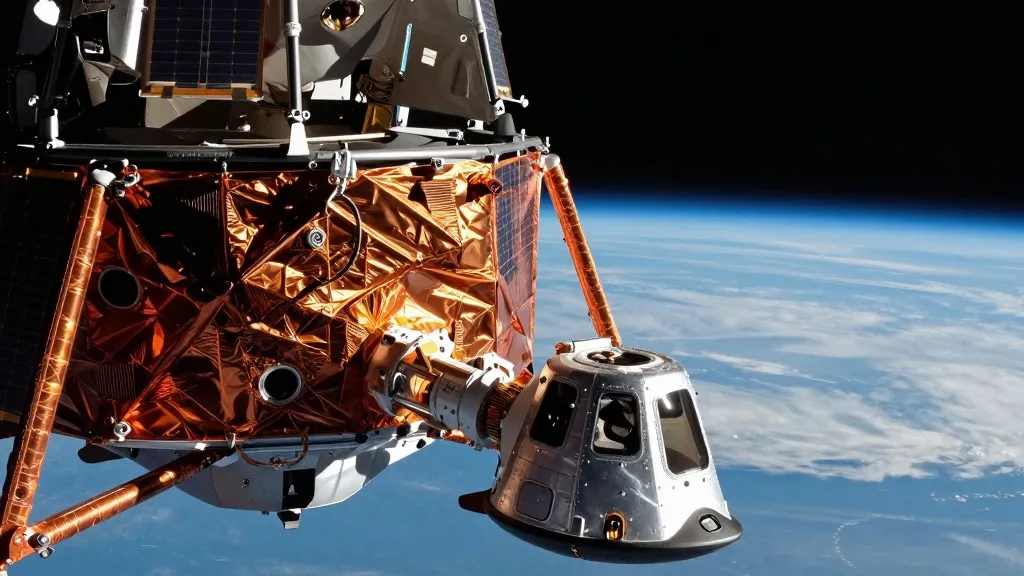
For residents of the Great Lakes and Ohio Valley who keep an eye on space exploration, the timeline for returning humans to the Moon has just become clearer. NASA has officially confirmed that it remains on track to land astronauts on the lunar surface by 2028. This update follows a detailed news conference held on Friday, where agency leaders laid out the specific technical changes required to make that date a reality. While much of this information had been circulating in industry reports for months, this was the first time NASA presented the full, revised architecture publicly.
The most significant change involves how the different spacecraft will connect. For SpaceX, the plan now requires the Orion spacecraft to dock with the Starship lunar lander while both vehicles are still in high-Earth orbit. This is a major departure from previous concepts. By docking earlier in the journey, the vehicles can then travel to the Moon together, simplifying the complex maneuvers required near the lunar surface. This adjustment was driven by the need to reduce energy consumption and technical risks for the SpaceX team.
The approach for Blue Origin is distinct from the SpaceX strategy. Their mission architecture relies on four separate launches of the New Glenn rocket. Crucially, this plan does not include any in-space refueling of one spacecraft by another. Instead, the Blue Moon lander is designed to rendezvous with the Orion capsule in low-Lunar orbit. This method allows for a more straightforward logistical chain, avoiding the complex and technically challenging process of transferring fuel between vehicles in deep space.
NASA officials emphasized that these architectural shifts are not just theoretical. They are part of a broader effort to support the private companies building the hardware. Administrator Jared Isaacman stated, “This is an achievable path we are on right now. We have the mandate, we have the resources, and the support from our stakeholders to be able to execute, and that’s what we intend to do.” His comments reflect a confidence that the agency has the necessary backing to meet its goals without significant delays.
The timeline for the next major step remains unchanged. NASA continues to anticipate launching the Artemis III mission by the summer of 2027. This mission will serve as a critical demonstration, involving docking maneuvers with both the Blue Moon and Starship vehicles near Earth. It is essentially a dress rehearsal for the final landing. If this goes well, the agency is tracking toward a 2028 launch for Artemis IV, which will finally put boots on the lunar surface.
The decision to move the docking point for the SpaceX vehicle was a direct response to engineering challenges identified in early 2026. SpaceX engineers had previously requested the removal of the requirement to dock in a near-rectilinear halo orbit around the Moon. That specific orbital path required more energy to maintain and presented other technical difficulties. The cancellation of the Lunar Gateway project earlier this year effectively removed that hurdle, allowing for the simpler high-Earth orbit docking procedure now in the plan.
This update marks a pivotal moment for the Artemis Program. By acknowledging and implementing these substantial changes, NASA is aligning its strategy with the practical capabilities of its commercial partners. The agency is taking a hard look at every element of the program to ensure that the companies can execute their plans efficiently. This proactive approach aims to accelerate the overall schedule rather than letting technical bottlenecks creep in over time.
While the dates remain ambitious, the leadership has expressed a clear intent to hold to the schedule. The question now is whether the complex coordination between two different private landers and the government-provided Orion capsule can be achieved without hiccups. For now, the path is clear, and the agency is moving forward with the resources and support needed to make the 2028 landing happen.
Source: Ars Technica