Tesla Terminates Cybertruck Production Plans for Australian and New Zealand Markets
After nearly seven years of waiting, reservation holders in the region will receive full refunds and optional FSD subscriptions as Tesla pivots to selling existing left-hand-drive models.
By Lucia Herrera ·
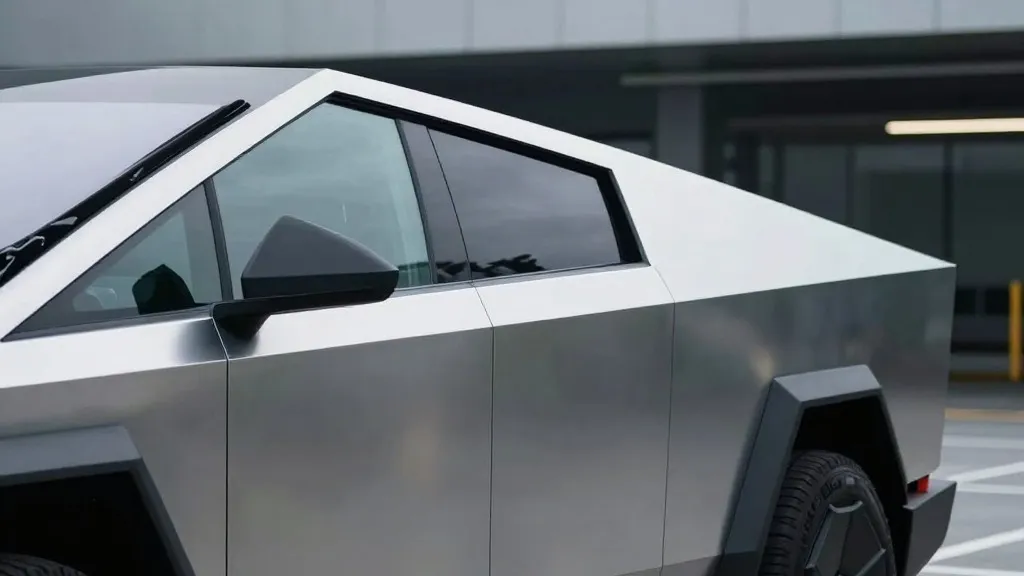
For thousands of residents in Australia and New Zealand who have been waiting nearly seven years for an electric pickup, the wait has officially ended without a vehicle. Tesla has notified its regional reservation holders that the Cybertruck will no longer be produced for their markets, effectively voiding their orders. The automaker is issuing full refunds for all deposits made and is offering a one-year subscription to its Full Self-Driving (Supervised) software for those who switch to a Model 3 or Model Y.
The decision was communicated via email to customers who had placed A$150 reservations as early as November 2019. The message stated that after careful consideration, plans to produce the Cybertruck for Australia and New Zealand have been discontinued. Consequently, the company is unable to fulfill the reservations and will process refunds within 30 days. To soften the blow for existing customers, Tesla is incentivizing a transition to its right-hand-drive vehicles by providing the free FSD subscription to those who place a new order.
This announcement arrives one day after Tesla reported its third-quarter 2026 earnings, highlighting a strategic shift in its global rollout. The core issue remains the vehicle’s design: the Cybertruck is manufactured exclusively in left-hand drive. While markets like South Korea, the UAE, and several Middle Eastern nations have begun receiving deliveries, Australia and New Zealand require right-hand-drive vehicles that meet specific local certification standards. The cost of re-engineering the truck for these two markets has proven difficult to justify given current demand levels.
Australia was initially considered a significant market for the Cybertruck. Crowdsourced data from 2020 indicated it held the third-largest number of reservations globally, behind the United States and Canada, representing approximately 3% of the total. By 2023, tracking data suggested total global reservations had reached around two million. However, Tesla quietly closed the Australian reservation page in May 2022, replacing the order option with a button to receive updates. At that time, no refunds were issued, leaving customers in a state of limbo for four years.
In 2024, Tesla shipped a Cybertruck to Australia for a display tour, and CEO Elon Musk suggested to shareholders that the vehicle might be certified for other markets the following year. That timeline passed without a right-hand-drive version emerging. The delay was driven partly by demand challenges in North America, where the truck’s sales have slowed significantly since its launch. The vehicle, which was originally marketed with a starting price of A$39,900 equivalent, has since seen its price increase and its range fall short of initial promises, further complicating the value proposition for international buyers.
The financial rationale for the cancellation is rooted in production volumes. In the third quarter of 2026, Tesla delivered just 8,295 units categorized as "Other Models," a segment that now predominantly consists of Cybertrucks following the end of Model S and Model X production. Estimates place Cybertruck sales at between 7,000 and 8,000 units for that quarter, translating to an annual pace of roughly 30,000 units. This is significantly lower than the production capacity of 250,000 units annually that Tesla established for the model. For a company managing a global supply chain, such a volume is difficult to support for a specialized right-hand-drive program serving a combined population of approximately 33 million in the two affected countries.
Tesla’s international strategy for the Cybertruck has thus far focused exclusively on left-hand-drive markets. Deliveries began in South Korea late last year and expanded to the UAE in January, with configurators launching in Saudi Arabia, Qatar, Jordan, and Israel. The vehicle remains blocked from entering the European Union, primarily due to pedestrian safety regulations. The company is now effectively treating the Cybertruck as a niche product, primarily for the North American and select Asian and Middle Eastern markets, rather than a global volume seller.
While many Australian customers may have already canceled their pre-orders given the four-year silence after the reservation page closed, the formal notification marks the end of the uncertainty. The decision confirms that Tesla is unlikely to invest further resources in expanding the Cybertruck’s international footprint in the near term. Instead, the focus remains on finding buyers for the existing left-hand-drive inventory in compatible markets, while reserving its right-hand-drive production lines for the Model 3 and Model Y, which continue to serve the Australian and New Zealand consumer base.
Source: Electrek